
Have you ever walked into a room and felt like the ceiling was pressing down on you? Many houses built in the last fifty years feature standard eight-foot ceilings. While this height is practical for heating and cooling, it can sometimes make a room feel cramped or “boxy.” We all dream of those grand, airy homes with massive windows and towering entryways, but most of us have to work with the square footage we already have.
The good news is that you don’t need to hire a construction crew to rip off your roof and raise the rafters. Interior design is full of “visual tricks” that can fool the human eye. By using specific colors, smart lighting, and strategic furniture placement, you can make a low ceiling feel like it is floating several inches higher than it actually is.
In this guide, we are going to explore the best DIY-friendly ways to add “visual height” to your home. We will look at the power of paint, the importance of vertical lines, and how to choose the right fixtures. By the end of this article, you will be ready to transform your “cozy” rooms into “expansive” sanctuaries.
1. The Magic of Paint: Color and Finish
Paint is the most affordable tool in your home improvement kit. When it comes to height, the goal is to make the boundary between the walls and the ceiling disappear.
- The “All-White” Strategy: Painting your ceiling a crisp, bright white is the classic move. White reflects the most light, which makes the surface feel further away. For the best effect, use a “flat” or “matte” finish on the ceiling. This hides imperfections and prevents glare, which can draw the eye to the actual height of the surface.
- Cool Colors Recede: In the world of art, “warm” colors (like red and orange) feel like they are coming toward you, while “cool” colors (like light blue or soft gray) feel like they are moving away. If you don’t want a white ceiling, choose a very pale, cool-toned blue. It mimics the sky and creates a sense of infinite height.
- Paint the Trim to Match: If you have dark wooden crown molding, it acts like a “picture frame” around the ceiling. This draws a hard line that tells the eye exactly where the wall ends. To make the room feel taller, paint your crown molding and baseboards the same color as the walls. This creates one long, unbroken vertical plane.
2. Lighting: Pointing the Glow Upward
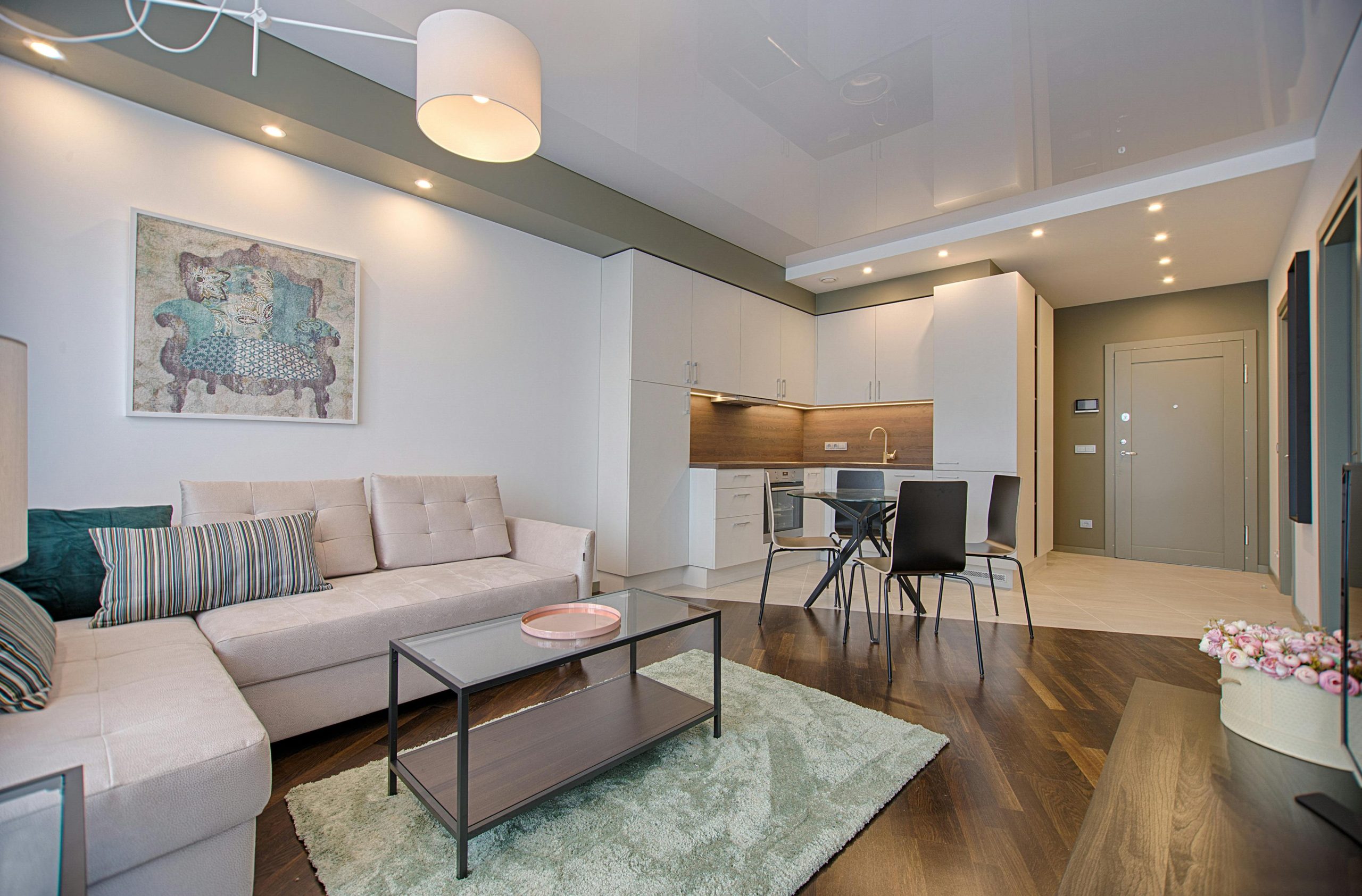
Most standard homes have a “boob light” (a flush-mount dome) in the center of the ceiling. This is one of the worst things for a low ceiling. It creates a bright spot in the middle and casts shadows in the corners, which makes the ceiling feel heavy and low.
- Avoid Hanging Fixtures: If your ceiling is low, avoid large chandeliers or low-hanging pendants. These physically take up space in the room and act as a “visual anchor” that reminds everyone how close the ceiling is.
- Embrace Recessed Lighting: Thin, LED “wafer” lights that sit flush with the ceiling are a game-changer. They provide plenty of light without taking up any physical space.
- The “Up-Lighting” Trick: Use floor lamps or wall sconces that point the light upward. When you illuminate the ceiling itself, it “lifts” the surface visually. It turns the entire ceiling into a soft, glowing light source rather than a dark lid.
3. Window Treatments: High and Wide
Windows are a huge part of how we perceive a room’s scale. Most people hang their curtain rods right at the top of the window frame. This is a missed opportunity for adding height.
- Hang it High: Install your curtain rod as close to the ceiling as possible—usually about two to four inches below the ceiling line. This forces the eye to track all the way up the fabric.
- Go All the Way Down: Make sure your curtains touch the floor or even “puddle” slightly. Short curtains that stop at the windowsill “cut” the wall in half, making the room look squat. Long, vertical drapes create a powerful upward line.
- Avoid Busy Patterns: For the most height, choose solid-colored curtains that are a similar shade to your walls. This prevents a “choppy” look and keeps the focus on the vertical length.
4. Vertical Lines and Patterns
Our eyes naturally follow lines. If you want a room to look taller, you need to provide “paths” for the eye to travel from the floor to the ceiling.
- Vertical Stripes: You don’t need a circus-themed room to use stripes. A subtle, tone-on-tone striped wallpaper can make a room look three feet taller. You can also achieve this with “shiplap” installed vertically or thin wooden slats.
- Tall Bookshelves: Floor-to-ceiling bookshelves are a fantastic investment. They draw the eye upward and provide plenty of storage. If you can’t do built-ins, choose tall, thin bookcases rather than short, wide ones.
- Full-Length Mirrors: A large, leaning mirror is a classic designer secret. Not only does it reflect light (making the room feel bigger), but its height emphasizes the vertical space of the wall.
5. Furniture Selection: Keep it Low
It sounds counterintuitive, but if you want your ceiling to look high, your furniture should be low.
- Low-Profile Seating: Choose sofas and chairs with low backs and thin legs. When there is more “empty space” between the top of the sofa and the ceiling, the room feels much more expansive.
- Avoid “Chunky” Pieces: Massive, overstuffed recliners or heavy wooden armoires can “clog” a room visually. Keep the furniture “leggy” so you can see more of the floor and the wall behind the pieces.
- Clear the Sightlines: Try to keep the middle of the room as open as possible. If you have a tall plant or a floor lamp, place it in the corner. This keeps the “view” of the room clear, which emphasizes the overall volume.
6. Architectural Details and “Fifth Wall” Designs
While most people focus on flat drywall, there are different types of ceilings that can actually help with height.
- The Tray Ceiling Illusion: A “tray” ceiling features a center section that is recessed higher than the perimeter. By painting the center section a slightly lighter color than the border, you create a “pocket” of space that feels much higher than a flat surface.
- Remove the Popcorn: If you have an old “popcorn” or textured ceiling, it is actually making your room feel lower. Texture creates tiny shadows that make the ceiling look heavy and “busy.” Scraping the ceiling smooth and painting it with a fresh, flat white can make a room feel instantly taller.
- Expose the Beams: If you have a vaulted ceiling with dark wood beams, consider painting the beams the same white as the ceiling. This softens the “visual weight” of the structure and makes the peak of the vault feel even higher.
7. The Power of Artwork
The way you hang your art can change the “vibe” of your walls. Most people hang art too low, or they use one tiny picture on a giant wall.
- Vertical Groupings: Instead of one wide landscape painting, hang two or three smaller pieces in a vertical row. This creates a “ladder” for the eye to climb.
- Hang it Higher: The standard rule is to hang art at “eye level” (about 57 to 60 inches from the floor). If you want more height, push it up an inch or two higher than normal.
- Draw the Eye Up: Place a small piece of art above a doorway or on a high shelf. It’s an unexpected detail that forces people to look up, noticing the full height of the room.
8. Doors and Entryways
The “opening” to a room tells you a lot about its scale. Small, cramped doorways make a ceiling feel low before you even step inside.
- Floor-to-Ceiling Doors: If you are doing a renovation, consider installing taller doors. A standard door is 80 inches. Pushing it to 96 inches (right up to the ceiling) makes the room feel grand and custom-made.
- Transom Windows: If you can’t replace the door, consider adding a “transom” window above it. This extra pane of glass lets in more light and draws the eye to the very top of the wall.
9. Area Rugs and Flooring
The floor is the “anchor” of the room. If the floor feels “busy,” it can make the ceiling feel like it is closing in.
- Large-Scale Rugs: A tiny rug makes a room look small. A rug that is large enough for all your furniture to sit on creates a “foundation” that makes the room feel wider and taller.
- Consistent Flooring: Use the same flooring from one room to the next. When the floor plan is “seamless,” the eye doesn’t stop at the doorway. It keeps moving, which emphasizes the overall volume of the house.
10. The “Long View” Strategy
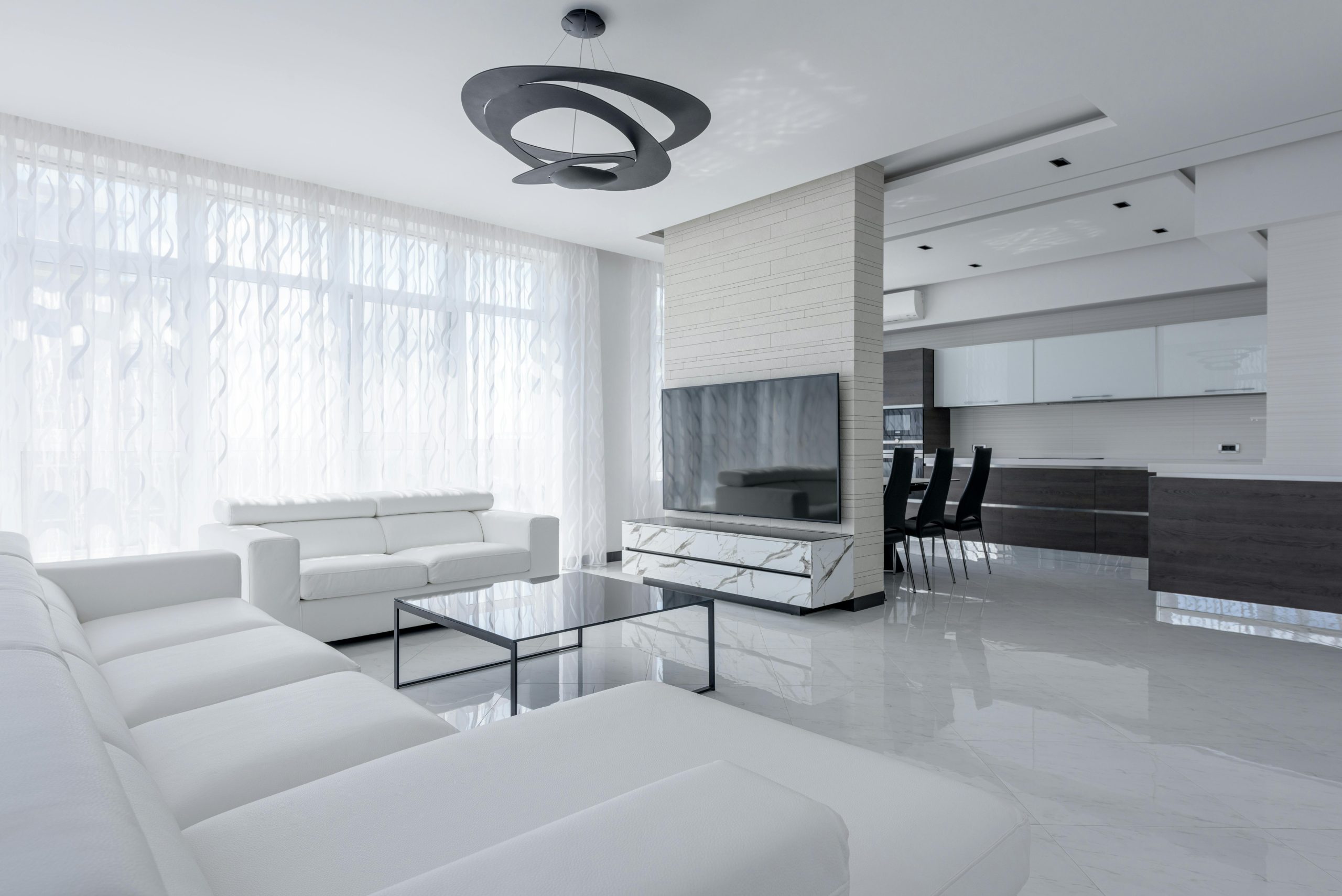
Finally, think about the “sightlines” of your home. If you can see all the way through a room and out a window, the room feels larger.
- Sheer Curtains: Use sheer “voile” curtains. They provide privacy but still allow you to see the “shape” of the window and the light outside. This keeps the room feeling “connected” to the outside world, which is the ultimate way to make a space feel infinite.
- Minimalist Decor: Less is more. A cluttered room feels small, no matter how high the ceiling is. By keeping your surfaces clean and your “knick-knacks” to a minimum, you allow the architecture of the room to shine.
Conclusion: Elevating Your Space
Making a ceiling look higher is all about “managing” the eye. You want to eliminate horizontal breaks and emphasize vertical lines. By painting your trim to match your walls, hanging your curtains high, and using “up-lighting” to brighten the corners, you can transform the feel of your home in a single weekend.
Remember, a home doesn’t need ten-foot ceilings to feel luxurious. It just needs a sense of balance and light. Whether you live in a modern apartment or a classic bungalow, these tips will help you create a space that feels open, airy, and full of life.
Stop feeling “boxed in” and start looking up! With the right paint and a few smart layout choices, the sky—or at least the ceiling—is the limit.